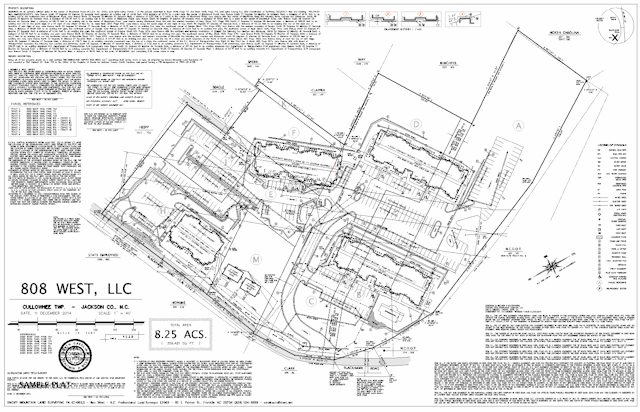
When starting on various realty or development project, the significance of expert surveying is crucial. Accurate surveys serve as the basis upon which successful projects are built, ensuring that blueprints remain rooted in fact and that property boundaries are well-established. Professional surveyors offer expertise and detail to the project, offering essential insights that affect everything from land development to negotiating disagreements. Grasping the function and benefits of surveying services is essential for residential owners, real estate developers, and contractors alike.
This article, we will examine the numerous reasons for employing a skilled surveyor and look into the different kinds of land surveys. Beginning with learning how how property line surveys aid in avoiding disputes to recognizing the value of elevation surveys, we will uncover what to expect during a land survey and how innovative technologies, such as Global Positioning System and drones, are transforming the industry. In conclusion, you will understand how surveying services not just safeguard property rights but also facilitate for effective construction and development projects.
Main Advantages of Hiring Professional Surveyors
Qualified surveyors provide a wealth of experience and expertise to land surveying, making sure that the outcomes are accurate and trustworthy. Their thorough understanding of regional regulations, property law, and technical skills permits them to navigate complex surveying tasks with efficiency. This knowledge minimizes the risk of errors which can lead to significant delays and disputes, ultimately providing peace of mind to property owners and developers alike.
One major benefit of hiring expert surveyors is their ability to mitigate potential legal issues. Boundary surveys can identify exact property lines, which is crucial for avoiding disputes with neighbors or ensuring that property developments adhere with local zoning regulations. By securing accurate surveys, property owners can escape costly legal battles that may occur from boundary misunderstandings, saving both time and money in the long run.
Finally, qualified surveyors employ cutting-edge technology, such as GPS and drone technology, to enhance the exactness and effectiveness of their work. This technological integration allows for increased comprehensive data collection and analysis, resulting in well-informed decisions regarding land use, development, and conservation. By using these modern tools, surveyors can provide their clients with clear, visual depictions of their properties, allowing them to make educated choices.
Types of Evaluations and Their Significance
There are numerous categories of surveys that play a critical role in land oversight and growth. Boundary surveys are created to define the precise lines of property title, which can avoid disputes among neighbors and clarify property rights. These surveys are essential for property owners, real estate transactions, and any development initiatives, as they provide binding documentation of property boundaries. Similarly, topographic surveys capture the contours of the land, showing elevations and depressions, which are essential for designing drainage systems, roads, and building placements.
Another significant type of survey is the ALTA/NSPS assessment, which is customized for commercial properties and required by lenders and title companies. This category of evaluation provides detailed information regarding property boundaries, easements, and potential encroachments, ensuring that every element of the property are thoroughly evaluated before a transaction. These surveys are recognized nationally and help facilitate real estate development and investment by mitigating risks associated with property ownership.
Construction staking services are also critical, as they translate survey data into physical markings on the ground that guide builders in the construction process. This includes setting precise locations for structures based on the approved plans and ensuring compliance with zoning regulations. By utilizing various surveying methods, including modern technologies like GPS and drones, surveyors provide invaluable information that facilitates smooth project execution and minimizes costly delays, contributing to the overall success of infrastructure and development projects.
Technological Advances and Advancements in Surveying
Progress in technology have changed the domain of land measurement, making it more efficient and accurate than in the past. Land Surveys Malmesbury Wiltshire of GPS allows land surveyors to obtain exact location data rapidly, which is crucial for multiple uses such as defining boundaries and construction markup. This technology reduces the time utilized in the field and enhances the accuracy of calculations, reducing the chance for mistakes that can occur with traditional surveying methods.
Unmanned Aerial Vehicles have also become an invaluable asset in the survey sector, providing aerial imagery and data collection with remarkable speed. This innovation allows for the surveying of extensive regions in a limited amount of the duration it would take using standard land techniques. Drones equipped with high-resolution cameras and laser sensors can acquire extensive terrain information, which is particularly helpful for topographic surveys and environmental surveys. The capability to retrieve extensive data from hard-to-reach locations further broadens the skills of professional surveyors.
Additionally, software developments in GIS and 3D modeling have improved the visualization and analysis of data from surveys. These systems enable land professionals to create comprehensive maps and models that aid in urban planning, land development, and infrastructure projects. The integration of these technologies not only improves the correctness and productivity of land assessment tasks but also delivers stakeholders with comprehensive insights and enhanced choices regarding their initiatives.